
EASOB Photo Evidence Requirements for Energy Assessors
Elvis
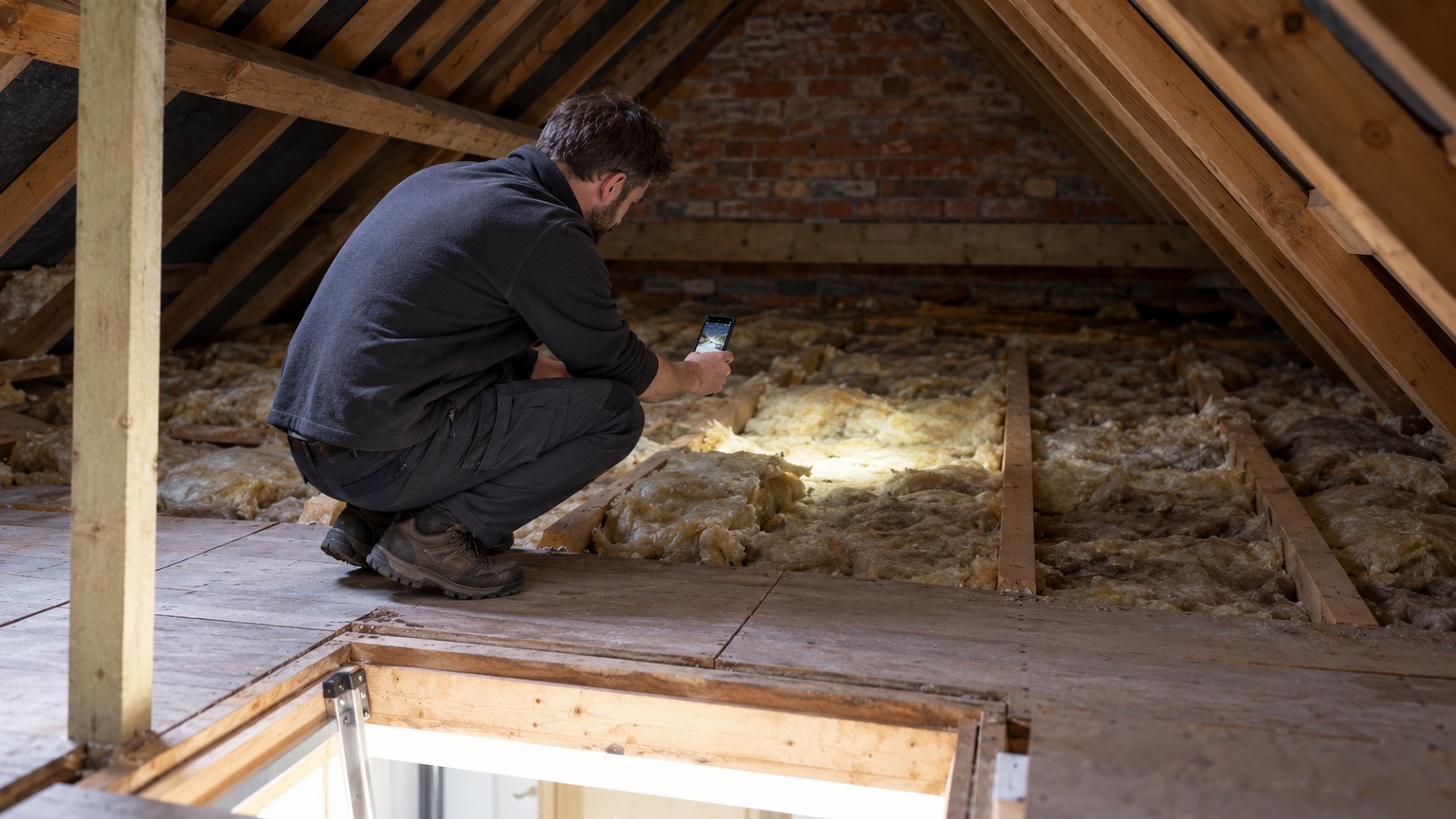
From 1 October 2026, EASOB Minimum Evidence Requirements apply across energy assessor accreditation schemes in England and Wales. For DEAs, the key rule is simple: "Photographs must be clear and date stamped, and geo-tagged where possible."
This does not mean every item needs its own photo. It does mean your evidence file must give an auditor enough information to replicate the EPC, including clear photos where they apply, sound site notes, plans and property-specific documents.
What is EASOB?
EASOB is the Energy Assessor Scheme Operating Board. It brings together accreditation schemes and other stakeholders to define operating rules for energy certificates. It works under MHCLG oversight and is not a new statutory regulator. You can read its background in About EASOB.
The new minimum evidence documents are a shared baseline for schemes in England and Wales. They apply to:
- Domestic Energy Assessors, DEA
- Non-Domestic Energy Assessors, NDEA
- On-Construction Domestic Energy Assessors, OCDEA, including SAP work for new dwellings
- Display Energy Certificate assessors, DEC
- Air-conditioning energy assessors, ACEA
Scotland and Northern Ireland follow their own arrangements. The published EASOB requirements cover England and Wales.
The new photo requirement in practice
The DEA document says: "Photographs must be clear and date stamped, and geo-tagged where possible."
The NDEA and DEC documents use closely related wording: photographs must be “clear, date stamped, and geo-tagged where possible.” ACEA uses the DEA wording.
There are several important limits and practical points:
- Photos are required only where applicable.
- One photo can evidence more than one element.
- Documentary evidence can be used where a photo is not possible.
- Any documentary evidence must be specific to the property and allow independent verification.
- If a photo cannot be obtained, the reason should be recorded in your site notes.
- Documentary evidence is not a default replacement for a site visit or for photos that could reasonably be taken.
For DEAs, the core test is that an auditor must be able to replicate the EPC from the evidence retained.
“Date stamped” is not defined in the EASOB documents. Earlier scheme guidance could accept a date shown visibly on the image or held in image metadata. Our reading is that a visible date and location stamp on the image, alongside retention of the original file, is the safest practical approach. That is an interpretation, not a statement that EASOB requires a visible stamp in every case.
DEA minimum evidence requirements: what to photograph and retain
The DEA Minimum Evidence Requirements set out the main evidence needed for an RdSAP assessment. Your file will normally need a mixture of photos, sketches, measurements, site notes and supporting documents.
Floor plan and site notes
Retain:
- A sketch of all levels, with measurements and area calculations in metric units to two decimal places.
- Window sizes and orientation.
- Room layout.
- Heat-loss walls and party walls.
- Site notes covering mandatory data not evidenced elsewhere.
- Your reasoning for decisions on age, construction, heating and other assessment inputs.
Elevations and construction
Evidence should cover:
- Front, rear and side elevations where appropriate.
- Alternative wall types.
- Heated or unheated corridors serving flats where relevant.
- Wall type and party wall type.
- Wall thickness for each building part.
- Roof and floor types.
- Conservatory separation and heating.
Insulation
For insulation, capture evidence for the applicable measures, including:
- Cavity drill pattern.
- External wall insulation or internal wall insulation.
- Loft insulation.
- Room-in-roof insulation.
- Floor insulation.
- Any overwritten U-values.
The loft requirement is particularly specific. You need a photo of measured loft insulation thickness, plus a loft overview. A wide photo of the loft alone is not the same as evidence of the measured depth.
Windows, doors and lighting
Keep:
- At least one photo of each different window type, age or draught-proofing condition.
- FENSA documentation where glazing details are known.
- Evidence of external doors.
- One example of each different lamp type in a fixed fitting.
Heating, hot water and ventilation
Your evidence should cover the relevant systems and controls, including:
- The boiler or heat pump and its ID label.
- Heating controls.
- Emitters.
- Oil or LPG tank where applicable.
- Secondary heating and fuel.
- Cylinder size, insulation thickness and thermostat.
- Declared heat loss.
- Shower types, WWHRS and FGHRS where present.
- Chimneys, flues, fans, vents and flueless devices.
- Air pressure test certificates where relevant.
- Mechanical ventilation details.
Renewables and meters
Where present, retain evidence for:
- Solar PV or solar thermal, including external roof photos.
- Diverters.
- Battery storage capacity.
- Wind or hydro systems.
- Gas and electricity meters, including dual-rate, smart-meter or export capability where relevant.
How EPC audits use your photos
The Level 2 Scheme Operating Requirements v1.14 link audit activity to the new minimum evidence requirements.
Evidence must be unique to the property visited and “reflective of the nominated date”. Auditors can compare your plans, site notes, photos and documents against the relevant minimum evidence requirements. If evidence is absent, the file should explain why in the site notes.
Before lodging an EPC, DEC or air-conditioning inspection report, assessors must declare that minimum evidence has been obtained and retained. Trade sources expect lodgement software to begin asking for this declaration in November 2026, although an exact date has not been confirmed in the official documents.
Audits include at least 2% of certificates over each 12-month period, alongside risk-based smart audits. Schemes also check for evidence problems that can suggest poor practice or fraud.
Photo issues that can trigger audit concerns
Auditors and schemes may look for:
- Missing photos or missing explanation in the site notes.
- Photos that do not support the EPC input or site notes.
- Images that are not clearly linked to the assessed property.
- Stock photography.
- Reused images across a member’s audits.
- High-lodgement patterns, including checks on three properties visited on the same day to confirm that the photos are all dated and different.
The SORs say schemes sample audits for stock photography and compare photos with a member’s previous audits to identify reused images. An unsupported declaration can lead to disciplinary or remedial action. Outcomes can range from feedback and remedial work to suspension. Suspected fraud may lead to immediate suspension and reporting.
For a DEA, a defective EPC may need to be replaced and the replacement can then be audited. Good evidence is therefore not just an administrative extra. It supports the assessment itself.
What changed on 1 October 2026?
Before the EASOB minimum evidence requirements, schemes had their own guidance. For example, older Elmhurst DEA QA guidance said photos should be dated either visibly on the image or in metadata, while geo-tags were described as good practice.
The change is a common baseline across schemes. The 2026 requirements bring together:
- Shared minimum evidence standards.
- Clearer wording on date-stamped photos.
- Geo-tagging where possible.
- The explicit test that an auditor must be able to replicate the EPC.
- A formal declaration at lodgement that minimum evidence has been obtained and retained.
For OCDEAs, the approach is different. OCDEA photographic evidence is required where Approved Document L requires it. The assessor must retain a copy of the photographs used to verify on-site construction.
For NDEAs, where photography is not permitted, the requirement is more specific: retain a restricted-access document signed and dated by the client.
A practical way to capture date-stamped, geo-tagged photos on site
A consistent capture process can make EPC evidence requirements photos easier to manage, especially when you are moving quickly between rooms, lofts and plant areas.
Timemark is a free camera app for iPhone and Android. At capture, it prints the date, time, address and GPS coordinates onto the image, with an optional note. Its time comes from the network rather than the phone clock. It can still take photos with a weak signal, such as in lofts or basements, and sync data later.
A simple on-site process is:
- Download Timemark from timemark.com/download.
- Start each inspection with an external property photo where practical.
- Add a short, consistent note before taking key evidence photos.
- Photograph the relevant element and any measurement, label or control that supports the EPC input.
- Take an overview photo as well as a close-up where context matters, such as a loft insulation measurement.
- Retain your original images, plans, notes and documents with the assessment file.
A useful note format is:
Job 2048 | 12 High Street | Loft | Measured depth 270 mm
For a boiler photo, you might use:
Job 2048 | Boiler | ID label and controls
For larger assessor firms, Timemark Teamspace on the Business plan can collect photos by project, person and date, and export PDF photo reports. Timemark photos also carry a Photo Code that can be checked using the Photo Verification tool.
Timemark cannot add its capture stamp to an old photo, so it works best as part of your normal inspection routine rather than as a later evidence fix. It is not required by EASOB or accreditation schemes, and no app can guarantee an audit pass.
For related guidance on photo evidence in other site-work contexts, see ECO4 and Part L photo evidence.
Pre-lodgement evidence check
Before lodging, take a few minutes to confirm:
- Your floor plan, measurements and site notes support the EPC inputs.
- Each applicable construction, insulation, system and opening has evidence.
- Loft evidence includes both the measured insulation thickness and a loft overview.
- Boiler or heat-pump evidence includes the ID label and controls.
- Photos are clear, linked to the property and dated.
- Geo-location has been captured where possible.
- Any missing photo has a clear reason in the site notes.
- Documents used instead of photos are property-specific and independently verifiable.
- Your evidence is retained and ready for audit.
Frequently asked questions
Does the date have to be visible on the photo?
The EASOB documents require photos to be date stamped, but do not define whether this must be visible on the image or held in metadata. Older scheme guidance accepted either approach. Our reading is that a visible date stamp, with the original file retained, is the safest practical option.
What if GPS is unavailable in a loft or basement?
The requirement says geo-tagged where possible. Take clear, date-stamped photos and use site notes to explain the situation if location data cannot be captured. A wider contextual photo can also help link the evidence to the property.
Can one photo cover several elements?
Yes. The EASOB documents state that one photo can evidence several elements. Make sure it is clear enough to show each relevant item and supports the EPC input you have recorded.
What if the client does not allow photos?
Record the reason in your site notes. Use property-specific documentary evidence where a photo is not possible, provided it allows an auditor to verify the information independently. NDEA requirements specifically refer to a signed and dated restricted-access document where photography is not permitted.
Do these rules apply to Scotland?
No. These EASOB requirements are for England and Wales. Scotland and Northern Ireland have separate arrangements.
Are photos required for every EPC input?
No. Photos are required where applicable. The evidence file can include photos, plans, site notes and documents. The key test is whether an auditor can replicate the EPC from what you have retained.
What does this mean for OCDEA and SAP photographic evidence?
OCDEA work follows a different requirement. Keep copies of photographs used to verify on-site construction where Approved Document L requires photographic evidence.
This article is general information. Follow your accreditation scheme’s current guidance.