
What Is Proof of Presence in Security Patrols?
Hesper Du · Jun 5, 2026
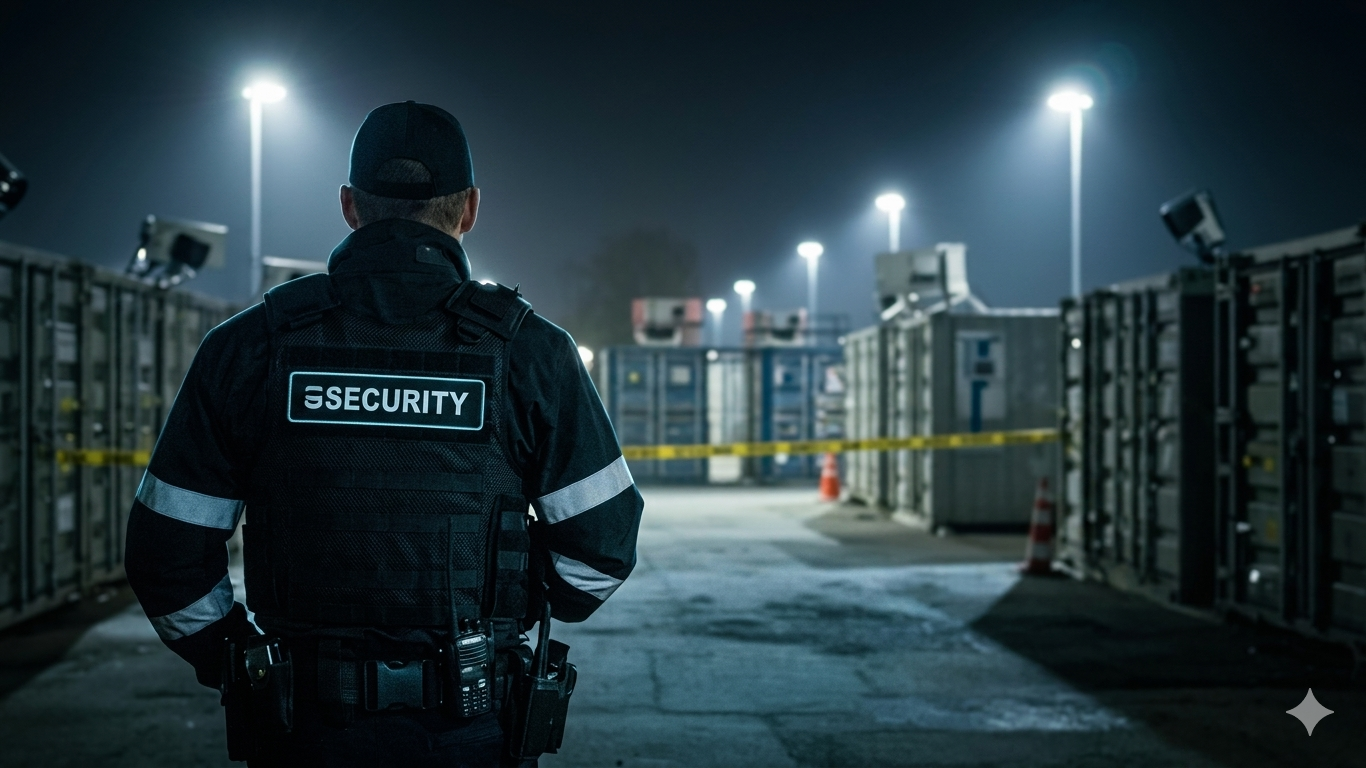
When you hire a security company, you are not just paying for a guard to show up. You are paying for proof that they showed up.
That distinction matters more than most clients realize. Industry data suggests that between 30% and 50% of paper-logged patrols may never have actually happened. For the clients paying for those patrols, that means a significant portion of their security budget may be going toward service that was never delivered.
A professional patrol schedule has three core components: appropriate coverage frequency, randomized timing, and verifiable digital records. If any one of those is missing, you have no reliable way to know whether your property is actually being protected.
Patrol frequency is not standardized across the industry. It depends on the risk profile of the property. Low-risk residential areas typically need one or two patrols per night, while commercial buildings or construction sites may require coverage every hour. A mobile patrol officer generally covers between 15 and 25 client sites per shift, with each site receiving two to six visits per night.
Frequency alone is not enough. The other critical element is randomization. Fixed routes at predictable times are a security vulnerability. Anyone with intent can observe the pattern and work around it. Professional security companies combine consistent coverage frequency with unpredictable timing, so the presence of a guard cannot be anticipated.
If a security company cannot tell you their specific coverage frequency for your site, that is the first red flag.
The traditional method of patrol verification is a paper sign-in sheet. A guard arrives at a checkpoint, writes their name and the time, and moves on.
The problem is that this system is easy to falsify. Sign-in sheets can be filled out in advance. Times can be fabricated. There is no mechanism that proves a guard was physically present at that location at that time.
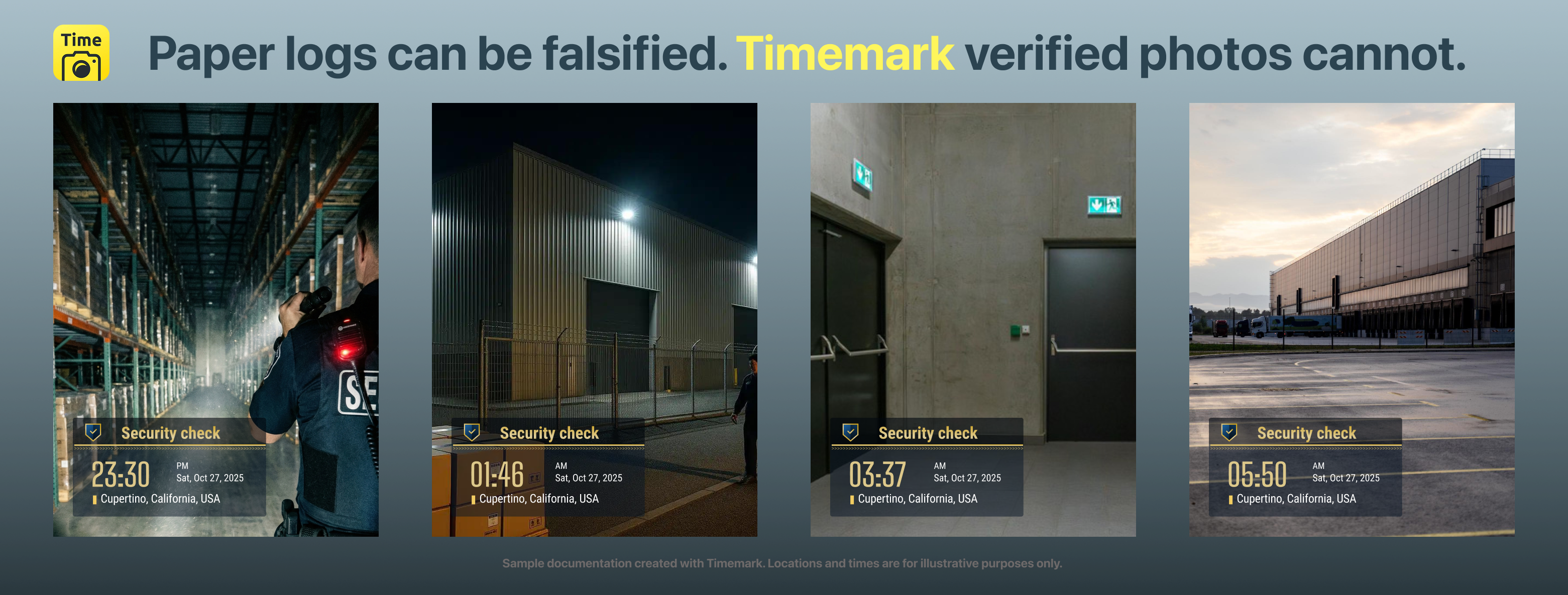
GPS-timestamped photos are the most reliable verification method available today. When a guard photographs a checkpoint using a GPS-enabled documentation tool, the photo automatically records the exact time and coordinates. That data is embedded at the moment of capture and cannot be altered after the fact. It proves that a specific person was at a specific location at a specific time.
Modern security contracts increasingly include measurable KPIs such as patrols completed, incident response times, and the number of incident reports submitted. If your security company cannot provide this kind of verified data, you have no objective way to evaluate whether the service is being delivered.
Before signing, clients should require the following:
Regular reporting in a standardized format, including daily activity logs, incident records, and notes on any irregularities. Reports should be auditable, not just verbal summaries.
Quantifiable service level agreements that specify patrol frequency, response times, and report submission deadlines. Vague commitments are not commitments.
Access to historical verification records on demand. You should be able to pull up patrol data from any date without having to request it from the security company first.
These signals suggest a company may not be able to provide verifiable service:
They rely entirely on paper logs with no digital record system. They cannot produce historical patrol data when asked. The contract does not specify patrol frequency. They cannot explain how they verify that guards reached each checkpoint. They are unwilling to give you independent access to patrol records.
Timemark helps clients who hire security services build a verifiable record of every patrol.
When a guard takes a photo in Timemark, the app automatically embeds a verified timestamp and GPS coordinates directly on the image. The date, time, and location are visible on the photo itself and cannot be modified after capture or stripped during transfer.
With Teamspace, all patrol photos are automatically organized by site and date in a cloud workspace. Clients can search and review verified patrol history for any time period without relying on the security company to provide it. When a dispute arises, the complete verified record is ready to retrieve and export immediately.
About Timemark
Timemark is a jobsite photo documentation app with timestamp, GPS geotag, and on-site notes. With Teamspace, field teams can automatically collect, organize, search, and export job photos across projects.
Timemark empowers construction, field service, telecom, and transportation teams to capture verifiable job photos to prevent disputes, support claims, and ensure project transparency. Timemark makes job photos trusted, organized, report-ready, and searchable. For setup instructions and product guidance, visit the Timemark Help Center.